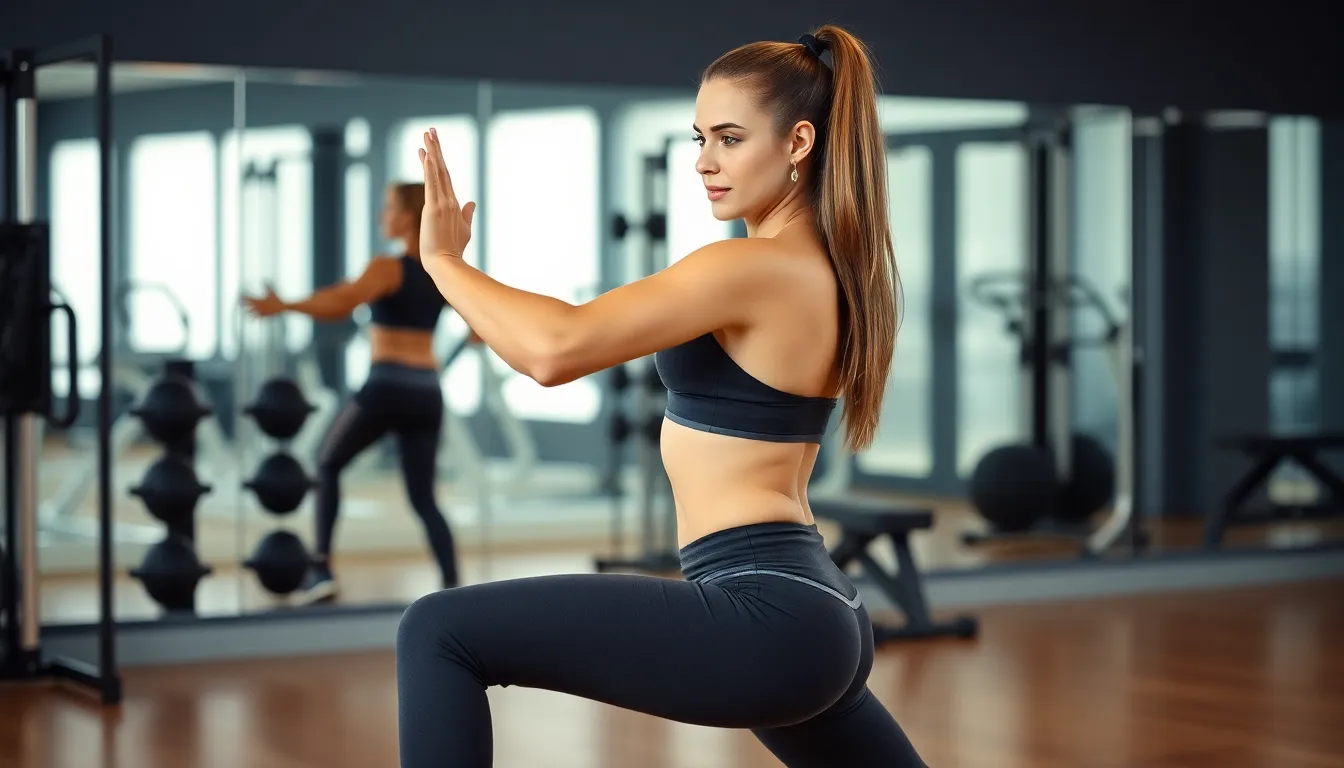
Reverse lunges might sound like a dance move gone wrong, but they’re actually a powerhouse exercise that deserves a spot in any fitness routine. While most people are busy mastering the forward lunge, they’re missing out on the unique benefits that reverse lunges bring to the table. Not only do they challenge balance and stability, but they also target those elusive muscles that often get neglected.
Table of Contents
ToggleOverview of Reverse Lunges
Reverse lunges serve as a dynamic exercise, effectively engaging multiple muscle groups. This movement not only enhances overall strength but also improves balance and stability.
Definition of Reverse Lunges
Reverse lunges involve stepping backward while lowering the hips, creating a lunge position. This exercise engages the quadriceps, hamstrings, glutes, and calves. The backward motion reduces strain on the knees, making it a safer alternative to traditional lunges. Such a technique also promotes better posture during execution.
Importance of Understanding Muscle Groups Engaged
Knowing the muscle groups targeted by reverse lunges aids in maximizing workout effectiveness. Engaging the glutes leads to improved hip strength and stability. Strengthening the hamstrings plays a crucial role in knee joint protection and mobility. Focusing on the quadriceps helps in developing overall leg power. Recognizing these muscle interactions fosters more informed exercise choices, contributing to better fitness outcomes.
Primary Muscle Groups Targeted
Reverse lunges effectively engage multiple muscle groups, enhancing strength and stability. Specific muscle groups targeted include the glutes, hamstrings, and quadriceps.
Glutes
Gluteal muscles play a significant role during reverse lunges. They facilitate hip extension as the body lowers and ascends. Activation of the glutes leads to improved strength in the posterior chain. Enhanced glute strength contributes to better posture, athletic performance, and reduced injury risk. Targeting these muscles creates a firmer and stronger backside.
Hamstrings
Hamstrings also receive substantial engagement during reverse lunges. These muscles assist in bending the knee while controlling descent and ascent. Strengthening the hamstrings aids in injury prevention and improves overall leg stability. Enhanced hamstring function supports various movements, such as running and jumping. Building hamstring strength through reverse lunges promotes balanced muscle development in the legs.
Quadriceps
Quadriceps are crucial for power and stability in reverse lunges. The quadriceps assist in stabilizing the knee and extending the leg during the movement. Working these muscles through reverse lunges leads to increased strength, contributing to improved performance in various exercises and sports. As the quadriceps strengthen, they enhance overall lower body power and endurance. Targeting the quadriceps results in more efficient movement patterns.
Secondary Muscle Benefits
Reverse lunges provide additional benefits by engaging several secondary muscle groups. These muscles contribute to overall performance and stability.
Core Stability
Core muscles play a vital role during reverse lunges. Engaging the abdominal and oblique muscles helps maintain an upright posture. Strengthening the core stabilizes the spine and pelvis while performing the movement. Improved core stability enhances overall strength and athletic performance. A strong core further reduces the risk of injury during various physical activities.
Balance and Coordination
Balance and coordination significantly improve with reverse lunges. The exercise challenges the body’s equilibrium, promoting better body awareness. Engaging the stabilizing muscles in the lower body encourages dynamic balance. Developing coordination between the upper and lower body enhances functional movements. Improved balance aids in performance during sports and daily activities.
Techniques for Performing Reverse Lunges
Understanding the correct techniques for reverse lunges enhances performance and minimizes injury risk. Proper execution involves careful attention to form and alignment.
Proper Form and Alignment
Maintaining proper form ensures effectiveness during reverse lunges. Begin standing with feet hip-width apart. Step back with one leg while lowering the hips toward the ground. Keep the front knee aligned over the ankle to prevent strain. Engage the core throughout the movement to stabilize the torso. Ensure both knees bend at roughly 90 degrees at the bottom of the lunge. Return to a standing position by pushing through the heel of the front foot. This movement activates the targeted muscle groups fully, optimizing results. Consistency with this alignment plays a vital role in achieving fitness goals.
Common Mistakes to Avoid
Avoiding common mistakes can enhance performance during reverse lunges. One frequent error involves allowing the front knee to extend beyond the toes, which increases injury risk. Rushing through the movement often results in compromised form, leading to ineffective workouts. Neglecting core engagement can result in instability, affecting balance. Failing to step back far enough may limit muscle activation, diminishing workout effectiveness. Additionally, not maintaining an upright torso during the lunge reduces stability. Mindfulness in execution helps prevent these pitfalls and promotes a safer, more effective exercise experience.
Benefits of Incorporating Reverse Lunges
Reverse lunges offer numerous benefits that enhance athletic performance and overall fitness. They specifically strengthen the lower body while promoting core stability.
Enhancing Lower Body Strength
Lower body strength increases significantly with the inclusion of reverse lunges in a workout routine. Quadriceps, hamstrings, and glutes benefit from the backward stepping motion. Engaging these major muscle groups contributes to muscle hypertrophy and improved strength. Individuals often experience heightened power during squats and other leg exercises. Regularly practicing reverse lunges leads to balanced muscle development and better functional movement in daily activities. The stability required during the motion also reinforces joint health.
Injury Prevention and Rehabilitation
Injury prevention becomes more effective when reverse lunges are incorporated into fitness regimens. The exercise encourages proper knee alignment, which reduces stress on the joints. Engaging the hamstrings and glutes during the movement supports the knees and enhances overall stability. Rehabilitation from lower body injuries sees improved outcomes when reverse lunges are included in recovery programs. They promote increased flexibility while maintaining strength, allowing for better mobility. Individuals can also enhance their proprioception, which plays a critical role in injury prevention during other physical activities.
Reverse lunges are a powerful addition to any fitness routine. They not only target key muscle groups like the glutes hamstrings and quadriceps but also enhance core stability and balance. By focusing on proper form and alignment during execution individuals can maximize benefits while minimizing injury risk. This exercise promotes overall strength and functional movement which is essential for daily activities and athletic performance. Incorporating reverse lunges into workouts can lead to improved muscle development better posture and a reduced likelihood of injuries. With consistent practice reverse lunges can significantly contribute to a well-rounded fitness regimen.