Madison’s dramatic weather swings, from January’s subzero deep freezes to July’s blistering heat, put serious stress on residential roofs. Throw in spring hail storms, heavy snow loads, and fall windstorms, and homeowners in Dane County face roofing challenges year-round. Ignoring minor damage can spiral into water intrusion, mold growth, and structural rot that costs thousands to remediate. Whether dealing with missing shingles after a windstorm or mysterious attic leaks, understanding when to grab a ladder yourself versus when to call a licensed roofer can save both money and headaches.
Table of Contents
ToggleKey Takeaways
- Madison’s extreme weather—from subzero winters to summer heat and spring hail—causes freeze-thaw cycles and damage that make regular roof inspections and timely Madison roof repair essential for preventing costly water intrusion and structural rot.
- Inspect your roof twice yearly for warning signs including interior water stains, attic leaks, missing shingles, granule loss, and damaged flashing, which together account for 90% of roof leaks.
- DIY repairs like replacing individual shingles, resealing flashing, and gutter cleaning are safe for low-slope roofs under 6:12 pitch, but structural damage, steep roofs, and hail-related claims require licensed professionals with proper insurance and equipment.
- Minor Madison roof repair costs $300–$600, moderate repairs run $800–$2,000, and major damage can reach $2,500–$7,000; compare repair costs against full re-roofing when repairs exceed 30% of replacement cost.
- Choose materials based on Madison’s climate demands: asphalt shingles offer cost-effectiveness (15–30 year lifespan), metal roofing lasts 40–70 years with minimal maintenance, and underlayment quality (synthetic or ice-and-water shield) is critical to preventing ice dam leaks.
Signs Your Madison Roof Needs Immediate Repair
Catching roof damage early prevents minor issues from becoming expensive catastrophes. Homeowners should inspect their roofs twice yearly, once after winter’s end and again after fall storm season.
Interior warning signs include water stains on ceilings or walls, especially after rain. Check attic spaces for daylight visible through roof boards, damp insulation, or dark streaking on sheathing that indicates moisture penetration. Peeling paint on soffits or fascia often signals water backing up under the roofline.
Exterior red flags are easier to spot from ground level with binoculars. Missing, curling, or cracked shingles expose the underlayment to UV damage and water infiltration. Granule loss, those colored ceramic bits that protect asphalt shingles, shows up as bald patches or accumulates in gutters. After Madison’s notorious spring hail storms, look for random dents on metal vents, circular bruising on shingles, or cracked edges. Hail damage might not leak immediately but compromises shingle integrity.
Sagging sections between rafters indicate structural problems, usually rotted decking or undersized framing. This requires immediate professional evaluation, as it poses collapse risk under snow load. Damaged flashing around chimneys, skylights, and vent pipes accounts for 90% of roof leaks. If the sealant looks cracked or the metal’s pulling away, water’s finding its way in.
Common Roofing Problems in Madison’s Climate
Madison’s climate dishes out a brutal combination that wears down roofing materials faster than in milder regions. The average roof here faces about 50 freeze-thaw cycles per winter, water seeps into tiny cracks, freezes and expands, then thaws and seeps deeper.
Ice dams form when heat escaping through inadequate attic insulation melts snow on the upper roof. Water runs down to the cold eaves, refreezes, and creates a dam that forces meltwater under shingles. Signs include icicles hanging from gutters (picturesque but problematic) and interior water damage near exterior walls. The Wisconsin Residential Building Code recommends R-49 attic insulation to prevent this, but many older Madison homes have half that amount.
Wind damage from spring and fall storms tears off shingles, especially on south and west exposures. Code requires shingles rated for 110 mph winds in Dane County, but installation quality matters more than rating, improperly nailed shingles fail at half the rated speed.
Hail damage roof repair in Madison, WI keeps contractors busy after severe thunderstorms. Hail between 1-2 inches diameter (roughly quarter to golf-ball size) cracks asphalt shingles, dents metal roofing, and destroys soft metals like aluminum gutters. Insurance claims spike after major hail events, but damage assessment requires trained eyes, cosmetic bruising differs from functional failure.
Moss and algae growth thrives in Madison’s humid summers, especially on north-facing slopes with tree shade. While primarily aesthetic on asphalt shingles, moss holds moisture against the surface and accelerates granule loss. Those black streaks are Gloeocapsa magma algae feeding on limestone filler in shingles. Zinc or copper strips installed at the ridge can prevent growth through metal ion runoff.
Condensation issues plague poorly ventilated attics. When warm interior air meets cold roof decking in winter, condensation forms and drips back onto insulation, reducing its R-value and promoting mold. Proper ventilation requires both soffit intake vents and ridge or gable exhaust vents, maintaining continuous airflow.
DIY vs. Professional Roof Repair: What Madison Homeowners Should Know
The line between reasonable DIY repair and foolish risk depends on the problem’s scope, roof pitch, and homeowner skill level. Madison’s building codes don’t require permits for roof repairs under 100 square feet (roughly 10′ × 10′), but they do demand full permits for re-roofing or structural work.
When to Tackle Repairs Yourself
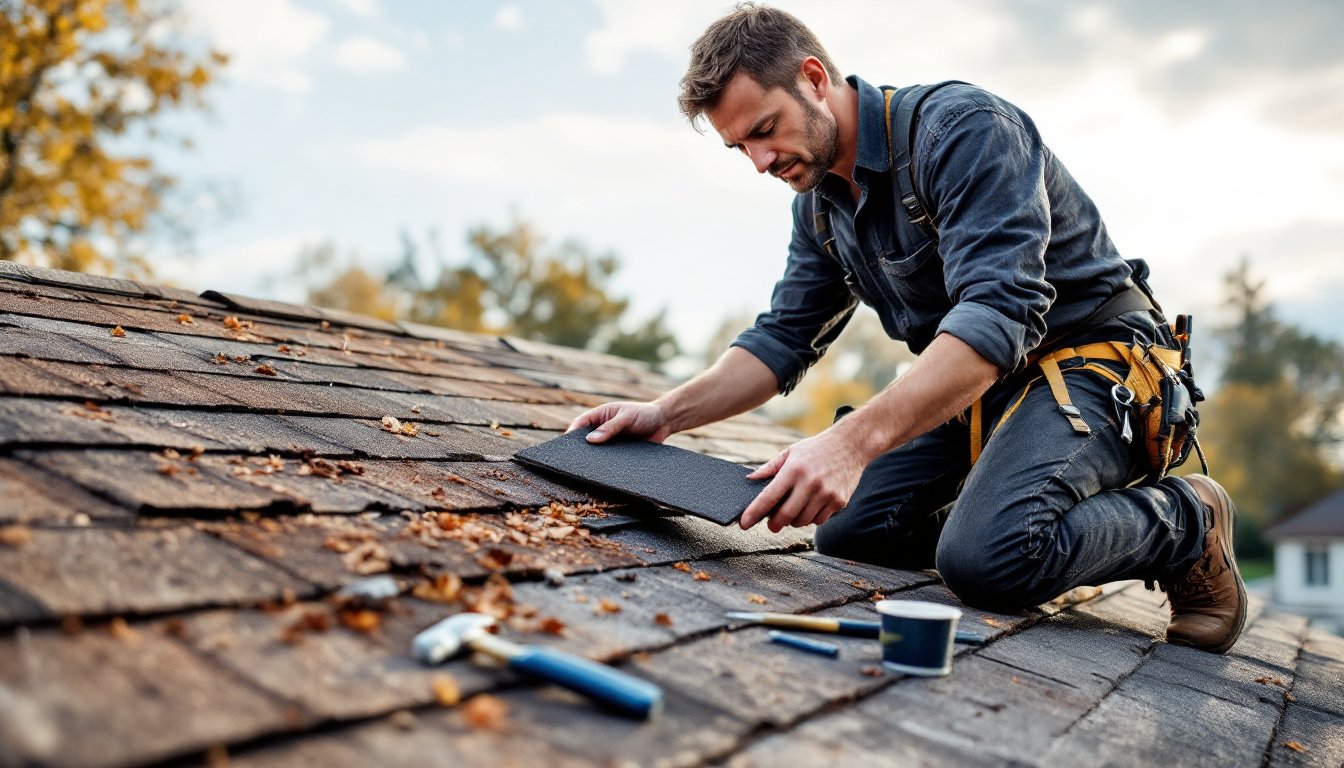
Homeowners with basic carpentry skills can handle certain repairs safely. Replacing individual shingles on low-slope roofs (4:12 pitch or less) is straightforward. You’ll need replacement shingles that match the existing ones, roofing nails (1¼” minimum length for asphalt shingles), a flat pry bar, a utility knife, and roofing cement.
The process: Lift surrounding shingles gently, remove nails from the damaged piece, slide it out, trim the new shingle if needed, slide it into position, nail it (four nails per shingle, placed just below the adhesive strip), and seal the lifted tabs with roofing cement. Work on cool mornings, hot shingles tear easily, frozen ones crack.
Resealing flashing around vent pipes or chimney bases prevents leaks without major surgery. Scrape away old cracked caulk, clean surfaces with denatured alcohol, and apply polyurethane or butyl rubber sealant (not standard latex caulk, which fails in temperature extremes). Many roof repair and maintenance tasks focus on these proactive sealing measures.
Cleaning gutters and minor debris removal protects roof edges from water backup. Wear gloves, use a stable ladder with standoff brackets, and never lean past the ladder rails. While up there, check that gutters slope toward downspouts (¼” per 10 feet) and that all fasteners are secure.
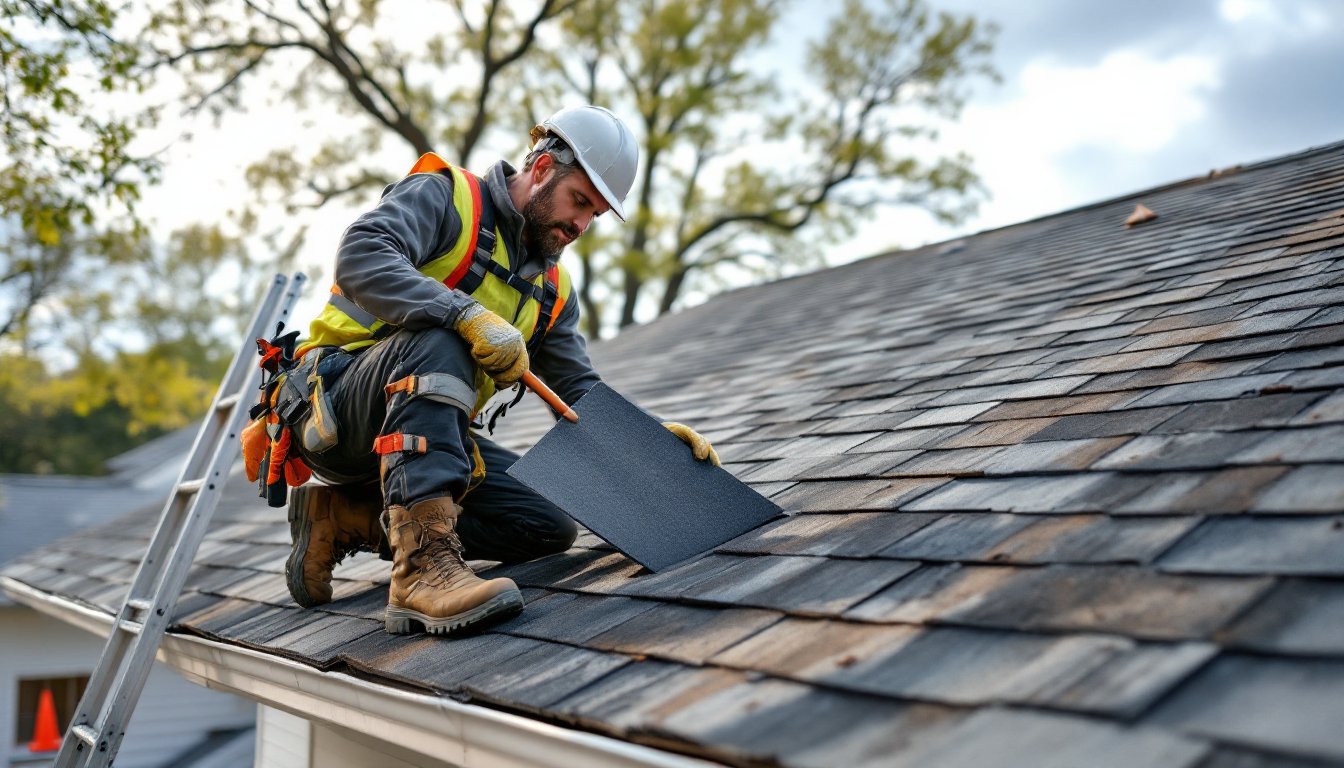
Safety gear is non-negotiable: Fall protection harness if working above 10 feet, rubber-soled boots with good tread, work gloves, and safety glasses. Avoid working in wind, rain, or on frosty surfaces. A roof anchor point and properly rated harness costs around $150, cheap compared to a fall.
When to Call a Professional
Some situations demand licensed contractors with proper insurance and equipment. Steep-pitch roofs (anything over 6:12 pitch, common on many Madison Victorians and bungalows) require specialized fall protection and experience navigating challenging slopes.
Structural damage like sagging decking, visible rafter damage, or widespread rot needs professional assessment. Contractors use moisture meters to map hidden damage and calculate load-bearing capacity. DIY fixes here risk catastrophic failure under Wisconsin’s 40+ pounds per square foot snow load.
Full hail damage claims benefit from professional documentation. Reputable contractors work with insurance adjusters, provide detailed damage reports with photos, and understand depreciation calculations. According to data from HomeAdvisor, the average roof repair claim in the Midwest ranges from $3,000-$7,000, depending on damage extent.
Multi-layer problems often hide beneath surface symptoms. A leak in one spot might originate 10 feet upslope where water runs along roof sheathing before dripping through. Professionals use thermal imaging and moisture detection to trace leak origins, worth paying for rather than playing whack-a-mole with patches.
Warranty considerations matter too. Most shingle manufacturers void warranties if installation doesn’t meet their specs, and some require certified installers. If your roof’s under warranty, check terms before attempting repairs.
Cost of Roof Repair in Madison: What to Expect
Repair costs in the Madison area vary widely based on damage extent, materials, roof accessibility, and current labor rates. As of 2026, skilled roofers in Dane County charge $75-$125 per hour, with most repairs billed as flat-rate projects.
Minor repairs (replacing 10-20 shingles, resealing a chimney flashing) typically run $300-$600 including materials and labor. If a homeowner supplies matching shingles, some roofers will install them for $200-$350 labor-only.
Moderate damage (replacing 50-100 square feet of shingles, repairing one section of damaged decking, addressing ice dam damage) costs $800-$2,000. This includes tearing off damaged material, replacing any compromised plywood sheathing (¾” CDX plywood runs about $45 per 4’×8′ sheet), installing new underlayment, and shingling.
Major repairs (extensive hail damage across multiple roof planes, replacing 200+ square feet, structural work) range from $2,500-$7,000. At this scale, comparing repair costs against full replacement makes sense. Industry data from Angi suggests that when repair costs exceed 30% of replacement cost, re-roofing often provides better long-term value.
Emergency service commands premium pricing. Weekend, evening, or storm-response calls might add 50-100% to standard rates, but temporary tarping and leak mitigation prevents worse damage. Expect $400-$800 for emergency tarp installation.
Insurance factors significantly into out-of-pocket costs. Most homeowner policies in Wisconsin carry $1,000-$2,500 deductibles. For hail damage, insurers typically cover replacement cost minus depreciation. A 15-year-old roof with 20-year shingles gets depreciated 75%, meaning the homeowner pays that percentage. But, policies with “full replacement cost” endorsements cover repairs without depreciation, worth the extra premium in hail-prone areas.
Permit fees in Madison run $50-$100 for major repairs requiring structural work. Re-roofing permits cost more and require inspections, adding $200-$400 to project costs. The City of Madison requires permits for any roofing work exceeding $5,000 in value.
Get three written estimates minimum. Legitimate contractors provide itemized bids breaking down labor, materials, waste disposal, and warranty terms. Be wary of door-to-door “storm chasers” offering deals requiring immediate signatures, reputable local contractors don’t use high-pressure tactics.
Choosing the Right Roofing Materials for Madison Homes
Material selection affects both repair costs and long-term durability in Madison’s climate. The right choice depends on existing roof structure, budget, aesthetic preferences, and how long the homeowner plans to stay.
Asphalt shingles dominate Madison roofing, they’re cost-effective, readily available, and contractors know them inside out. Three-tab shingles (the economy option at $90-$120 per square installed) last 15-20 years but offer minimal wind and impact resistance. Architectural (dimensional) shingles ($120-$180 per square) provide better performance with 25-30 year lifespans and enhanced wind ratings. For repair purposes, matching existing shingle style, color, and manufacturer ensures proper sealing and consistent appearance. Shingles weather over time, so even perfect matches look slightly different than surrounding aged material.
Metal roofing (standing seam or corrugated panels) costs more upfront ($400-$900 per square installed) but lasts 40-70 years with minimal maintenance. Metal sheds snow cleanly, resists wind damage, and handles freeze-thaw cycles better than asphalt. Repairs involve replacing damaged panels or resealing fasteners, straightforward for professionals but requiring specialized tools. Metal’s expansion and contraction requires proper installation techniques to prevent oil-canning (wavy appearance) and fastener failure.
Wood shakes and shingles (cedar being most common) fit Madison’s historic districts but require regular maintenance. They cost $350-$600 per square installed and last 20-25 years with proper treatment. Repairs involve replacing individual shakes, easier than asphalt since they’re not adhered together. But, fire ratings and insurance considerations make them problematic for some neighborhoods. Madison’s fire code requires Class A fire-rated roofing in most zones, which untreated wood doesn’t meet.
Synthetic (composite) materials mimic slate, shake, or tile appearance while offering better durability. They cost $250-$450 per square installed and carry 30-50 year warranties. Repair involves replacing individual pieces similar to wood shakes. Weight matches asphalt shingles, so existing roof structure doesn’t need reinforcement.
Slate and clay tile appear on some historic Madison homes, beautiful and incredibly durable (75-100+ years) but expensive ($800-$1,500 per square installed) and heavy. Repairs require specialists, as improper techniques crack these brittle materials. Roof framing must support 800-1,500 pounds per square (versus 200-300 for asphalt), so structural assessment precedes any work.
Underlayment matters as much as surface material. Standard 15-pound felt paper works for basic applications, but synthetic underlayment like Titanium UDL or similar products provides superior tear resistance and moisture protection, worth the extra $20-$30 per square. In valleys and around penetrations, ice and water shield (self-adhering rubberized membrane) prevents leaks where ice dams typically form. Wisconsin code requires it along eaves in northern counties, and smart Madison contractors extend coverage at least 36 inches past the interior wall line.
When planning repairs, matching existing materials maintains roof integrity and appearance. Mixing incompatible materials, say, adhering new architectural shingles over old three-tabs without removing the originals, violates code and voids warranties. Expert guidance from Bob Vila emphasizes that proper material selection accounts for local climate demands, existing roof structure, and realistic maintenance commitments. Madison homeowners should choose materials they’re willing to maintain properly rather than chasing the cheapest option and facing premature failure.