Summer temperatures in Garland regularly hit 100°F, and winter nights can drop into the 20s. When the HVAC system quits, it’s not a minor inconvenience, it’s a house emergency. Whether it’s a furnace that won’t ignite, a compressor that rattles like a paint-mixer, or refrigerant lines sweating through the drywall, knowing what’s fixable and what demands a licensed tech can save homeowners hundreds of dollars and days of discomfort. This guide walks through the most common HVAC failures in Garland, the line between DIY troubleshooting and professional intervention, how to vet repair companies, realistic cost ranges for 2026, and preventive steps that keep systems running when the mercury climbs or plummets.
Table of Contents
ToggleKey Takeaways
- HVAC repair in Garland requires understanding common climate-driven failures like refrigerant leaks, clogged condensate drains, and capacitor issues that demand professional attention when refrigerant or electrical systems are involved.
- DIY maintenance such as changing filters every 30–90 days, clearing condensate drains with vinegar, and cleaning condenser coils can prevent costly repairs and improve system efficiency by 10–20 percent.
- Verify Garland HVAC repair companies through active TACL licensing, liability insurance, multi-platform reviews, NATE technician certification, and by obtaining three written estimates for repairs exceeding $1,200.
- HVAC repair costs in Garland range from $150–$300 for capacitors to $1,800–$3,500 for compressor replacement; major repairs often make full system replacement more economical for units over 12 years old.
- Schedule annual professional HVAC maintenance including refrigerant checks and condensate drain flushing to prevent emergency calls and reduce energy bills by 10–20 percent.
Common HVAC Problems Garland Homeowners Face
Garland’s climate puts continuous strain on heating and cooling equipment. High humidity in spring and fall accelerates mold growth in drain pans and evaporator coils, while prolonged summer run-times stress compressor bearings and capacitor dielectrics. Understanding the repeat offenders helps homeowners diagnose issues faster.
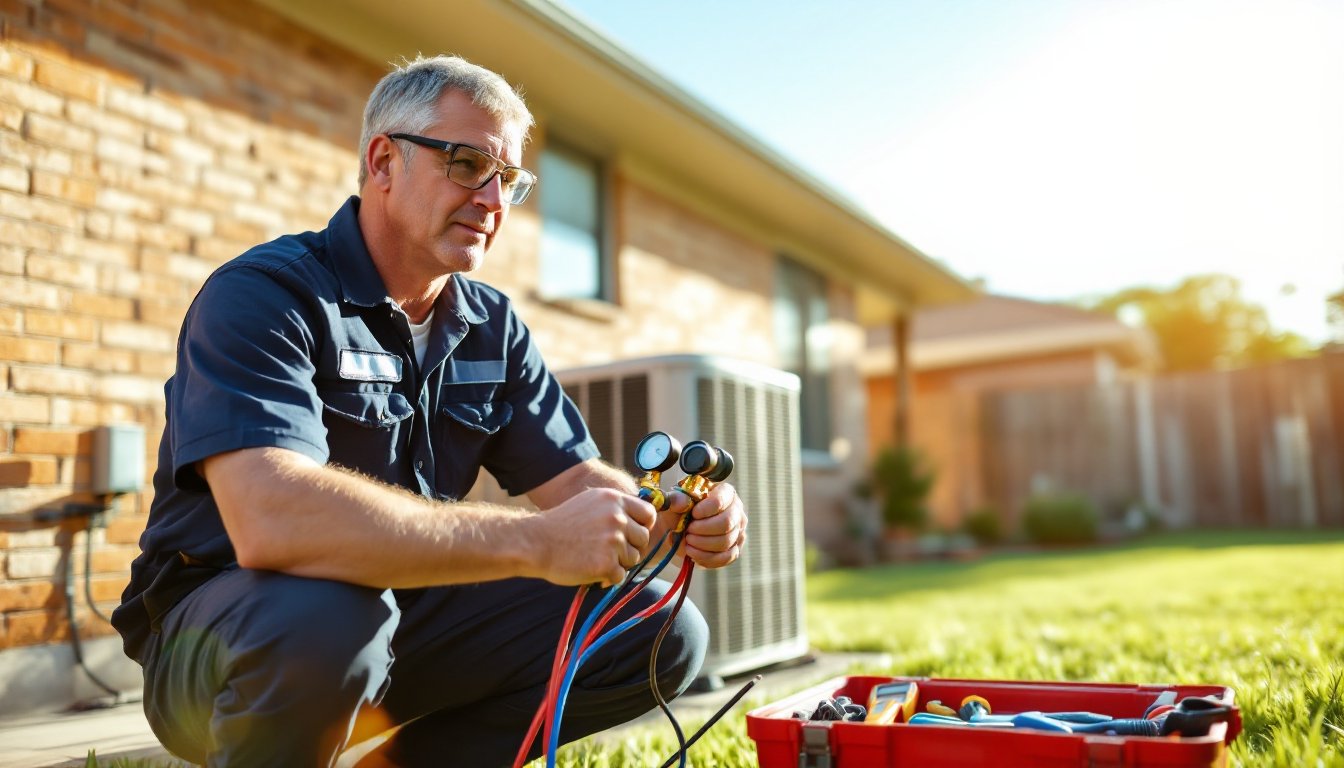
Refrigerant leaks are frequent in systems older than ten years. Corroded line-set joints or vibration-damaged flare fittings let R-410A escape, reducing cooling capacity and forcing the compressor to run longer cycles. Ice buildup on the suction line or warm air from the registers are telltale signs.
Clogged condensate drains rank as the number-one summer service call. Algae and dust form a slime that blocks the ¾-inch PVC drain line, triggering the float switch and shutting down the air handler. Water backing into the overflow pan can soak ceiling drywall if left unchecked.
Capacitor failure hits hard during July and August. The dual-run capacitor stores energy to start the compressor and condenser fan: when the dielectric film degrades, the compressor hums without spinning or the fan won’t turn. Homeowners often describe a burning smell from overheated windings.
Thermostat calibration drift causes short-cycling or temperature swings. Older mercury-bulb units lose accuracy after years of dust accumulation, and even digital models can misread if mounted on an exterior wall exposed to direct sun.
Dirty evaporator coils choke airflow and freeze over. When supply-register airflow drops noticeably and return-air temperature climbs above 80°F, the indoor coil likely carries months of dust that soap and a soft brush can remove.
When to DIY vs. When to Call a Professional
Some HVAC fixes require nothing more than a screwdriver and fifteen minutes: others demand EPA 608 certification, refrigerant manifold gauges, and liability insurance. Knowing which is which prevents wasted time and protects warranty coverage.
Simple HVAC Fixes You Can Handle Yourself
Changing the air filter every 30–90 days (depending on household dust and pet dander) is the single highest-impact task. A clogged 1-inch pleated filter (MERV 8–11) cuts airflow by 40 percent, starving the evaporator coil and triggering freeze-ups. Mark filter changes on a calendar or set a phone reminder.
Clearing the condensate drain takes a wet/dry vacuum and a bottle of distilled white vinegar. Locate the cleanout tee near the air handler, attach the vacuum hose to the exterior drain terminus, and pull for thirty seconds to extract the blockage. Pour a cup of vinegar into the drain pan quarterly to prevent algae.
Cleaning condenser coils improves efficiency by 10–15 percent. Shut off power at the disconnect box, remove the top grille, and spray the fins with a coil-cleaning foaming agent (available at any hardware store). Rinse from the inside out with a garden hose on low pressure to avoid bending the aluminum fins. Wear safety goggles and nitrile gloves, coil cleaners contain alkaline degreasers.
Resetting a tripped breaker or replacing a blown fuse can restore power instantly. HVAC systems typically run on a dedicated 30-amp or 40-amp breaker: if it trips repeatedly, stop and call a technician, that’s a symptom of a short circuit or compressor overload.
Recalibrating a programmable thermostat often solves temperature complaints. Check the heat-anticipator setting on mechanical models or run the calibration routine in digital units. If the thermostat sits in direct sunlight or near a heat register, relocate it to an interior wall five feet above the floor.
Stop immediately if the problem involves refrigerant (venting R-410A without EPA certification is a federal violation), electrical wiring beyond the thermostat, gas-line work on a furnace, or disassembly of the compressor or heat exchanger. These tasks require licensed professionals and often city permits.
How to Choose the Right HVAC Repair Service in Garland
Garland has dozens of HVAC contractors, and quality varies wildly. A methodical vetting process separates the professionals from the parts-changers.
Verify licensing and insurance. Texas requires HVAC contractors to hold a TACL (Texas Air Conditioning Contractors License) issued by the Texas Department of Licensing and Regulation. Ask for the license number and confirm it’s active on the TDLR website. General liability insurance protects homeowners if a tech damages ductwork or floods a ceiling: request a certificate of insurance before work begins.
Check multiple review platforms. A company with 4.8 stars on Google but no presence on the Better Business Bureau may be gaming reviews. Cross-reference ratings on Yelp, Angi, and local Facebook groups. Pay attention to responses to negative reviews, how a company handles complaints reveals more than glowing testimonials.
Ask about diagnostic fees and flat-rate vs. time-and-materials pricing. Some companies charge a $75–$125 diagnostic fee that’s waived if the homeowner approves the repair: others use flat-rate pricing books that can inflate costs on simple jobs. Request an itemized estimate before authorizing work, and confirm whether the price includes parts, labor, and disposal fees.
Inquire about technician certification. NATE (North American Technician Excellence) certification demonstrates that a technician has passed competency exams in installation, service, and system design. It’s not mandatory in Texas, but it’s a strong indicator of skill.
Get three quotes for major repairs. If the diagnosis involves a $1,200+ repair, compressor replacement, refrigerant leak repair with line-set replacement, or heat-exchanger cracks, collecting three written estimates exposes outliers. Many homeowners find options from platforms that match local contractors based on project scope and budget.
Ask about warranty coverage. Reputable shops offer a one-year labor warranty on repairs and honor manufacturer parts warranties (typically five to ten years on compressors). If a company won’t stand behind their work for at least ninety days, walk away.
What to Expect: HVAC Repair Costs in Garland
Garland’s HVAC repair pricing in 2026 reflects labor shortages, refrigerant regulations, and the age of housing stock. Most homes in Garland were built between 1970 and 2000, so techs often encounter legacy equipment and ductwork that complicates repairs.
Capacitor replacement runs $150–$300, including the part (a dual-run capacitor costs $20–$40 wholesale) and thirty minutes of labor. Some companies charge flat rates closer to $350.
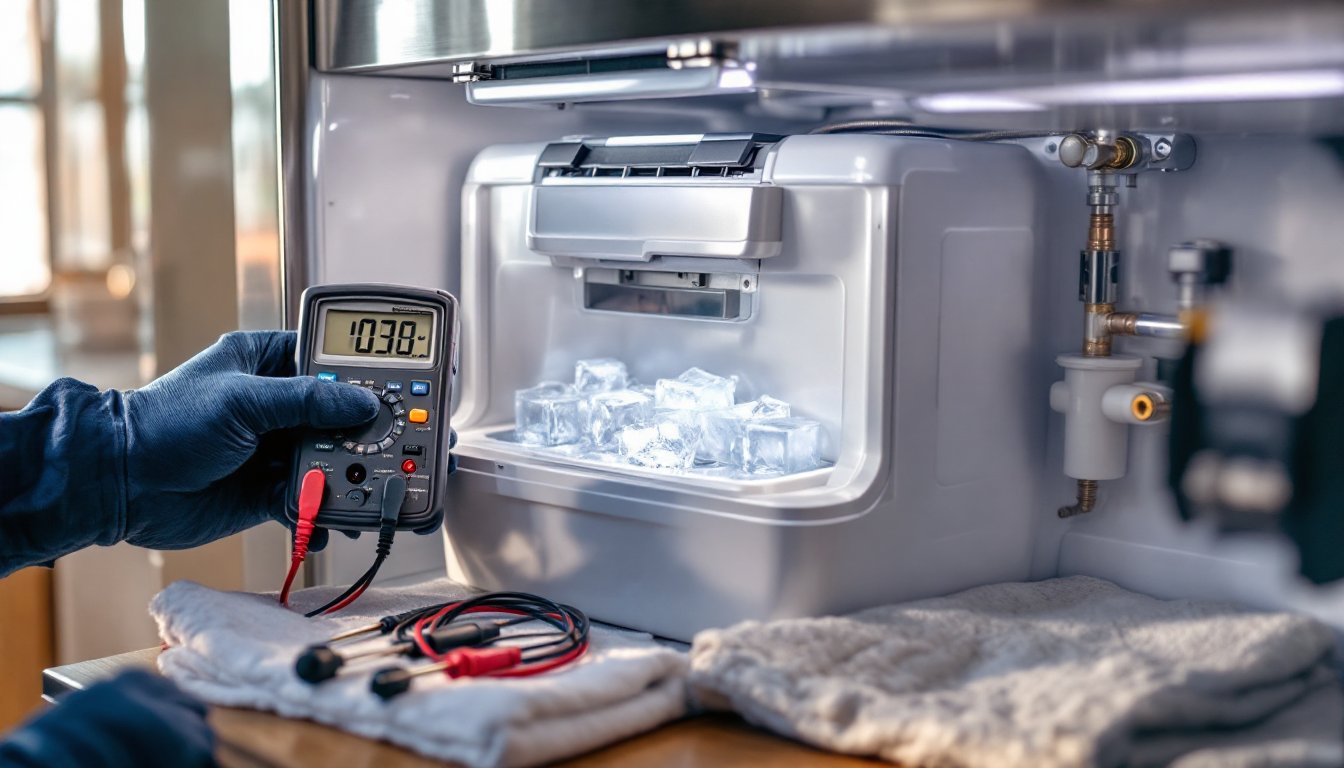
Contactor replacement (the relay that energizes the compressor) costs $125–$250. The part itself is $15–$30, but labor includes electrical testing to confirm the contactor, not a short circuit, is the culprit.
Condensate drain clearing typically costs $100–$175 if a homeowner calls for service. Preventive maintenance plans often include drain cleaning as part of a tune-up.
Refrigerant recharge is no longer a standalone fix. EPA regulations require techs to locate and repair leaks before adding refrigerant. Expect $400–$1,200 depending on leak location (evaporator coil pinhole leaks are cheaper to fix than line-set joints buried in walls). R-410A refrigerant costs have stabilized around $50–$75 per pound wholesale: a typical recharge is three to five pounds.
Blower motor replacement ranges from $400–$800. The motor ($150–$300 for a PSC or ECM unit) must match the air handler’s CFM rating, and replacement involves disconnecting the wheel, mounting bracket, and wiring harness.
Compressor replacement is a major repair: $1,800–$3,500 including the compressor, labor (four to six hours), refrigerant recovery and recharge, and system testing. At this price point, many homeowners compare full system replacement, which for a 3-ton 16-SEER split system runs $5,500–$8,000 installed.
Heat exchanger replacement on a gas furnace costs $1,200–$2,500, but if the furnace is over twelve years old, replacement usually makes more financial sense than repair. A cracked heat exchanger leaks carbon monoxide, so this repair is not optional.
Prices vary by company size, time of day (expect 20–30 percent surcharges for after-hours or weekend calls), and whether the system is under warranty. Always ask if the quoted price includes permit fees, Garland requires permits for refrigerant work and electrical modifications exceeding 50 amps.
Preventive Maintenance Tips to Avoid Costly Repairs
Most emergency HVAC service calls stem from deferred maintenance. A seasonal checklist keeps systems reliable and cuts energy bills by 10–20 percent.
Replace filters religiously. Mark a calendar for every 30–60 days during cooling season and every 90 days in winter. Homes with pets or recent remodeling (drywall dust accelerates clogging) should lean toward monthly changes. Use filters that match the system’s design, cheap fiberglass filters protect the blower but do little for indoor air quality: MERV 11 pleated filters trap pollen and mold spores without choking airflow.
Clean outdoor condenser units twice a year. Cottonwood seeds, grass clippings, and leaves clog fins and reduce heat rejection. Spray coils every spring before cooling season and again in fall. Trim shrubs and grass to maintain 24 inches of clearance on all sides.
Inspect and seal ductwork. Leaky ducts waste 20–30 percent of conditioned air. Check attic and crawlspace runs for disconnected boots and split seams. Seal joints with UL 181–rated foil tape (never cloth duct tape, which degrades) and insulate ducts in unconditioned spaces with R-6 or R-8 duct wrap.
Test the thermostat seasonally. Switch from heat to cool mode in April and back to heat in October. If the system doesn’t respond within five minutes, replace the batteries (even hardwired models have backup batteries) or check the breaker.
Schedule professional maintenance annually. A spring tune-up before cooling season should include refrigerant pressure checks, electrical connection tightening, capacitor testing, condensate drain flushing, and combustion analysis on gas furnaces. A fall visit preps the heating system. Many Garland HVAC companies offer $150–$250 annual maintenance contracts that include two visits, priority scheduling, and discounts on repairs. Homeowners researching local heating and air conditioning services can compare contractor offerings through platforms like top-rated HVAC professionals in Garland.
Monitor utility bills. A sudden 20 percent spike in electric usage without weather changes often signals a failing compressor, stuck contactor, or refrigerant leak. Catch it early, and repair costs stay manageable.
Keep records. Log filter changes, maintenance visits, and repairs in a binder or phone app. When selling the house, a documented service history boosts buyer confidence and resale value.
Conclusion
HVAC reliability in Garland hinges on recognizing fixable problems early, knowing when to grab a wrench versus a phone, and choosing technicians who value transparency over upselling. Homeowners who commit to quarterly filter changes, annual professional tune-ups, and basic coil cleaning avoid most emergency service calls. When repairs do arise, vetting contractors through licensing databases, independent reviews, and written estimates ensures fair pricing and quality work. A well-maintained system runs efficiently through Texas heat and cold, keeping repair bills low and comfort high.