Milwaukee Tool has built its reputation on professional-grade power tools that hold up to heavy use. But even the best cordless drill or impact driver eventually needs warranty service, and knowing how to navigate Milwaukee’s return and repair system can save time and frustration. Their online portal streamlines the process, if you know where to look. This guide walks through the warranty claim process, explains what’s covered, and shares practical tips to get tools back in service faster. Whether dealing with a defective battery or a motor that gave out mid-project, understanding the repair workflow helps avoid unnecessary delays.
Table of Contents
ToggleKey Takeaways
- Register Milwaukee tools immediately after purchase on their Service Portal to establish proof of ownership and streamline future warranty claims without needing original receipts.
- Milwaukee’s limited warranty covers defects in material and workmanship for 5 years on cordless tools, but excludes normal wear, abuse, modifications, and unauthorized repairs.
- The Milwaukee tools return and repair process requires an RMA number before shipping; submit your claim through milwaukeetool.com with the tool’s model and serial number to receive authorization within 1–2 business days.
- Warranty repairs typically take 7–10 business days from receipt to return shipment, with status updates provided via email at each stage including diagnosis, repair, and return tracking.
- Common warranty-covered issues include motor failures, battery capacity problems, switch failures, gearbox defects, and electronic control board faults, but damage from drops, misuse, or improper repairs are excluded.
- For out-of-warranty repairs, Milwaukee provides cost estimates upfront; minor fixes run $50–$75 while motor rebuilds can exceed $150, so compare repair costs against the price of new tools before deciding.
Understanding Milwaukee’s Warranty and Return Policy
Milwaukee offers different warranty periods depending on the tool category. M18 and M12 cordless tools typically come with a 5-year limited warranty covering defects in material and workmanship under normal use. Hand tools often carry a lifetime warranty, while accessories like batteries and chargers fall under a 2- or 3-year warranty depending on the model.
The warranty does not cover normal wear and tear, abuse, modifications, or damage from unauthorized repairs. If a drill gets dropped from scaffolding or a saw blade binds and burns out the motor, those aren’t covered. Commercial rental use voids most consumer warranties, though Milwaukee does offer separate rental programs.
Proof of purchase is required for warranty claims. Milwaukee recommends registering tools online immediately after purchase, this creates a digital record and simplifies future claims. Without a receipt or registration, the warranty begins from the tool’s manufacture date, which can reduce the coverage window by several months.
For retail returns within the 30-day purchase window, customers typically work directly with the retailer (Home Depot, Lowe’s, Acme Tools, etc.) rather than Milwaukee. Each retailer sets its own return policy, so check before assuming Milwaukee’s warranty applies to brand-new, unopened items.
How to Initiate a Return or Repair Through the Milwaukee Website
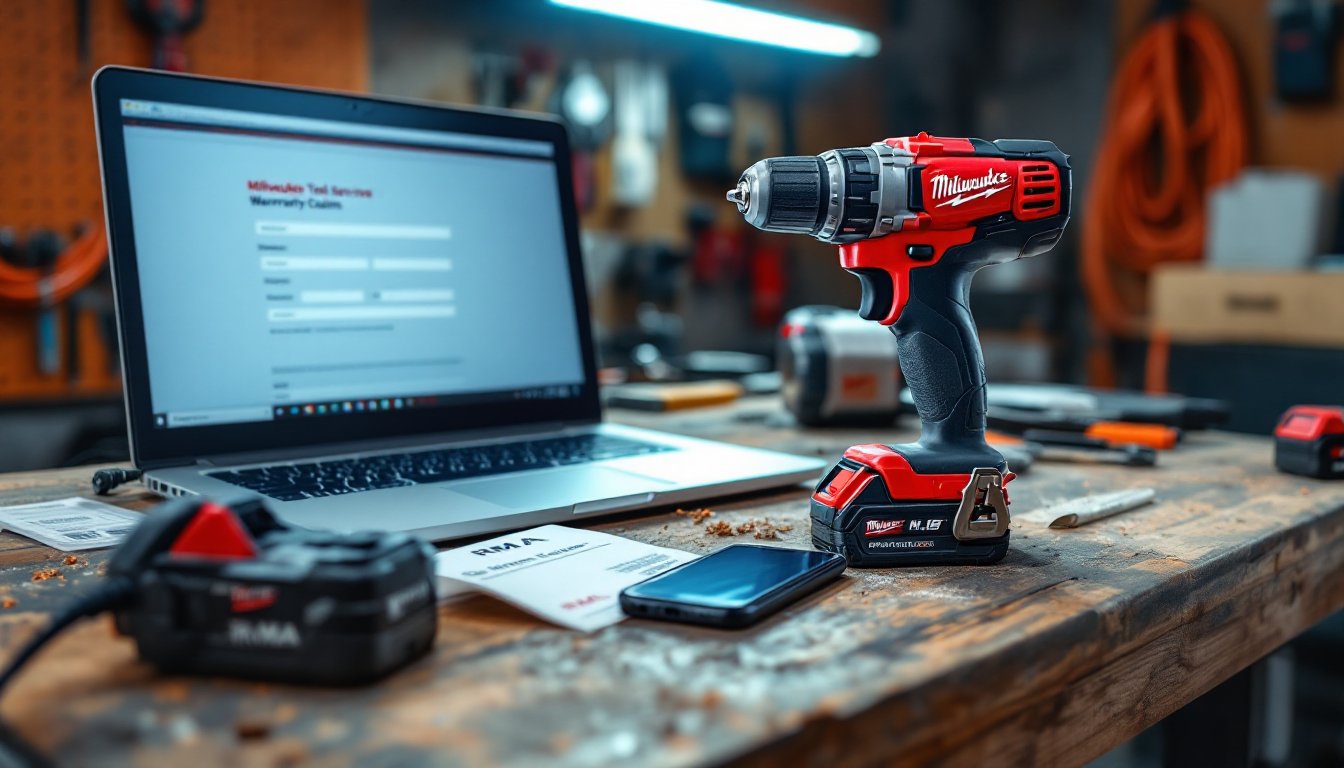
Milwaukee’s Service Portal at milwaukeetool.com handles warranty claims and repair requests. Start by creating an account or logging in with existing credentials. The portal requires basic information: tool model number, serial number, purchase date, and a description of the problem.
The model and serial numbers are stamped on the tool’s nameplate, usually near the battery slot on cordless tools or on the motor housing. Record these when first unboxing tools: they’re harder to read once covered in job-site grime. Have a digital photo ready if the numbers are worn or damaged.
After submitting the claim, Milwaukee reviews the information and issues a Return Merchandise Authorization (RMA) number via email, typically within 1–2 business days. The RMA includes shipping instructions and a prepaid label for sending the tool to an authorized service center. Do not ship without an RMA, unauthorized returns get delayed or rejected.
For tools purchased through authorized dealers, some retailers offer in-store warranty drop-off as an alternative. Home Depot’s Tool Rental Center, for example, accepts Milwaukee warranty items and coordinates directly with service centers. This skips the shipping step and often speeds up turnaround, especially for customers near home improvement cost estimators and service hubs.
Finding Your Nearest Milwaukee Service Center Online
The Service Portal includes a Service Center Locator that maps authorized repair facilities by ZIP code. Enter a location and set the search radius, options range from 25 to 100 miles. The results list each center’s address, phone number, hours, and accepted tool categories (some centers specialize in cordless tools, others handle corded equipment).
For walk-in service, call ahead to confirm the center accepts drop-offs and whether an appointment is required. Some locations prioritize mail-in repairs and have limited counter hours. Bringing the RMA number, proof of purchase, and the tool in its original case (if available) streamlines the intake process.
What to Expect During the Milwaukee Repair Process
Once Milwaukee receives the tool, a technician inspects it to verify the issue and confirm warranty coverage. Diagnosis typically takes 3–5 business days, though high-volume periods (post-holiday seasons, new product launches) can extend this.
If the defect is covered, Milwaukee repairs or replaces the tool at no charge. Repairs often involve swapping out motors, gearboxes, or electronic components. Replacements happen when a tool is discontinued, severely damaged, or uneconomical to fix. Replacement units are new or factory-refurbished models of equal or better spec, Milwaukee doesn’t downgrade.
For out-of-warranty repairs, the service center provides a cost estimate before proceeding. Typical charges include labor (often $40–$80 per hour), parts, and return shipping. Minor fixes like switch replacements might run $50–$75, while motor rebuilds can exceed $150. At that point, weigh repair costs against the price of a new tool, sometimes it makes more sense to upgrade, especially with evolving home improvement tools technology.
Turnaround time averages 7–10 business days from receipt to return shipment for warranty repairs. Out-of-warranty jobs can take longer if parts need ordering. Milwaukee emails status updates when the tool is received, diagnosed, repaired, and shipped back. Track the return shipment through the carrier provided (usually UPS or FedEx).
Batteries shipped for warranty service must be carefully packaged per DOT regulations, lithium-ion batteries are classified as hazardous materials. Milwaukee includes packaging instructions with the RMA, usually requiring batteries to be taped at the terminals and cushioned to prevent short circuits. Non-compliant shipments get rejected or incur additional fees.
Common Issues Covered Under Milwaukee Tool Warranty
Motor failures top the warranty claim list, usually caused by defective windings or bearing issues, not user error. If a drill spins sluggishly or emits burning smells even though a fresh battery and proper load, it’s likely a motor defect.
Battery problems include cells that won’t hold a charge, sudden capacity drops, or charging errors. Milwaukee’s REDLITHIUM batteries have onboard diagnostics: if the LED indicator blinks in unusual patterns (refer to the manual), it signals an internal fault. Batteries that simply wear out after years of normal use aren’t covered, lithium-ion cells have a finite cycle life of roughly 500–1,000 charges depending on use.
Switch and trigger failures often stem from internal contact wear. If a tool intermittently cuts out or requires excessive trigger pressure, the switch assembly is likely failing. These are straightforward warranty repairs.
Gearbox issues, grinding noises, metal shavings in the vents, or sudden loss of torque, typically qualify for warranty service if not caused by over-torquing or using the wrong bit type. Stripped gears from forcing a jammed bit won’t be covered, but spontaneous gear failure will.
Electronic control board faults in brushless tools cause erratic speed control, failure to start, or error codes displayed via LED indicators. These boards manage motor timing and battery communication, when they fail, the tool becomes inoperable. Milwaukee replaces defective boards under warranty.
Structural cracks in housings, particularly around mounting points or battery slides, are covered if they occur under normal use. Cracks from drops, impacts, or over-tightening mounting screws fall under abuse. Professionals relying on daily home maintenance checklists should inspect housings regularly to catch issues early.
Tips for a Smooth Return or Repair Experience
Register tools immediately after purchase. Milwaukee’s online registration takes under five minutes and creates a permanent record tied to the serial number. This eliminates scrambling for receipts years later.
Document the problem clearly when submitting the claim. Instead of “doesn’t work,” describe specifics: “trigger responds intermittently, full battery shows no power, LED blinks three times then stops.” Detailed descriptions reduce back-and-forth communication and speed diagnosis.
Clean the tool before shipping, technicians appreciate it, and it prevents debris from interfering with diagnostics. Brush out dust ports, wipe down the housing, and remove any tape or labels stuck to vents. Don’t disassemble the tool: leave that to the technicians.
Remove batteries and accessories unless the issue specifically involves those components. Chargers should be shipped separately if claimed. Including extra items risks loss or damage during handling.
Use sturdy packaging. The original tool case is ideal, but if unavailable, wrap the tool in bubble wrap and place it in a snug-fitting box with padding on all sides. Tools that arrive damaged from poor packaging complicate warranty evaluation.
Track everything. Save the RMA email, print the shipping label, and note the tracking number. Set up carrier notifications to alert when Milwaukee receives the package and when it ships back.
Have a backup tool for ongoing projects. Even expedited warranty service takes a week minimum. Professionals should maintain redundant critical tools, and DIYers tackling time-sensitive projects might consider renting a replacement during the repair window.
Follow up if timelines slip. If diagnosis takes longer than five business days with no update, call the service center directly using the number from the Service Locator. Most delays stem from parts availability or incomplete claim information, both are quicker to resolve with a phone call than waiting for email responses.
Consider third-party service for older, out-of-warranty tools. Independent repair shops experienced with Milwaukee tools often charge less than official service centers and may complete repairs faster. Verify they use genuine Milwaukee parts to maintain tool integrity.
Conclusion
Milwaukee’s warranty and repair system works efficiently when users understand the process and prepare accordingly. Registering tools, documenting issues thoroughly, and following RMA instructions minimize downtime and hassle. For most defects within the warranty period, the repair process is straightforward and cost-free, Milwaukee stands behind their professional-grade tools. Keeping detailed records and maintaining backup equipment ensures projects stay on track even when warranty service is needed.